For our first meeting of the year we kept to our usual format of two presenters and plenty of discussion around their material.
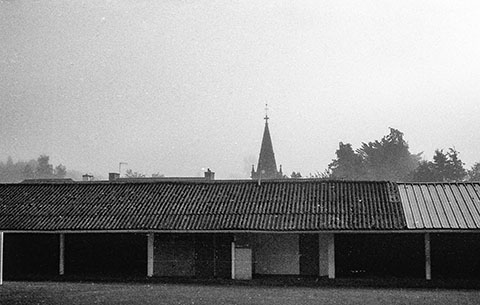
This time Fred Bellec talked us through her beginning record of the decline of her birth village in Brittany. An eloquent, often atmospheric, set of analogue black and white images showed the scale of industrialised agriculture, the closed shops and bar, the abandoned sports ground, the absence of pedestrians as all facilities, including the mairie have moved away and driving, even within the village, has become habitual. The football team is no more; one of the two schools will close soon and the church has no priest.
The discussion covered the choice of B&W over colour, whether more images of the local people could be included, perhaps with interviews, and encouragement to make use of an archive of newspaper photos taken by Fred’s father – and perhaps other regional archives.
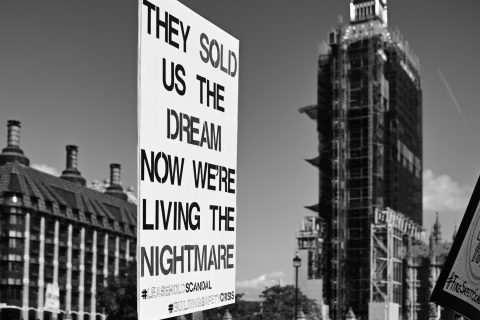
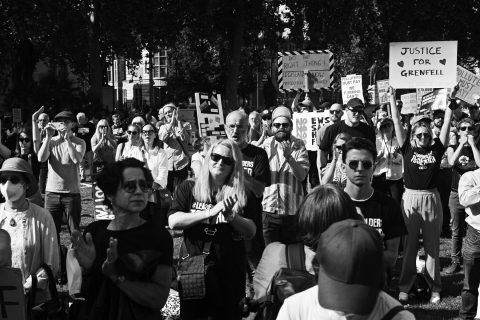
After an interval Anthony Palmer spoke about his work recording the Parliament Square demo protesting the national cladding scandal – and later related demos. Again choosing to work in black and white, he had concentrated on photographing banner and slogan texts and talking to people. These conversations and his putting photos on his website had led to requests for using images in campaign publicity.
The group, in discussion, paid attention to questions of a sharing strategy, including the use of picture libraries, response to calls from campaign organisers, and whether the campaigning photo set would benefit from a closer engagement (interviews) with such as the occupants of flats affected by the cladding crisis. Was there a possible use for a Becher-like typology of affected dwellings? Perhaps, Peter Marshall suggested, the greater agency of video makes it the preferable medium for the campaigning task. Would that be true for Fred’s work too? It is a conclusion reached by some of those engaged on the Swanscombe Project.
Peter Luck