Featured image © Lauris Morgan-Griffith
Personal Projects are, well, personal – as reflected in the work shown at LIP Central’s satellite meeting in May.
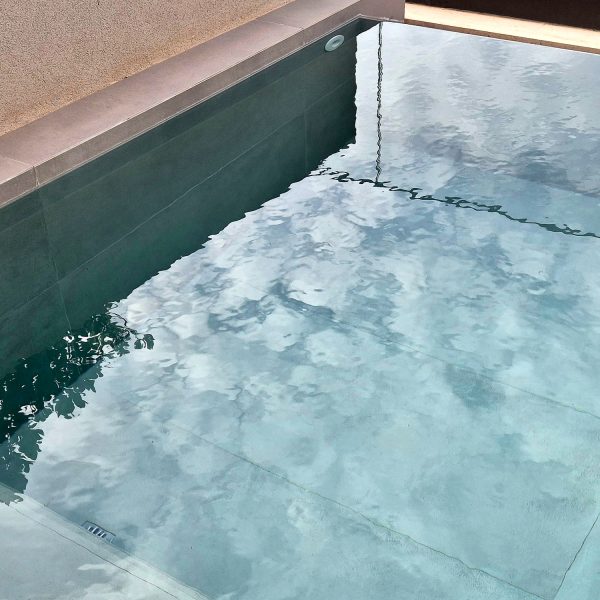
Jim Paterson exploited an unseasonably cool fortnight in Crete to photograph the plunge pool outside his hotel room. Using a square format, he presented a series of abstracted images of the pool, with reflected light on the surface and refracted light on the bottom. He noted that Hockney had been fascinated by swimming pools in California and he made his own attempt to draw thescene – not so much ‘A Bigger Splash’, more ‘No Splash at all’!
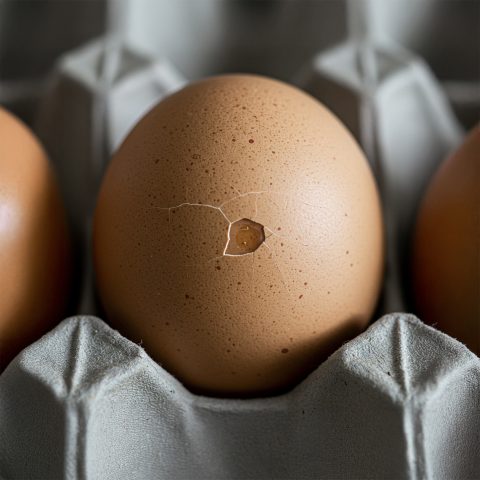
Jan Cylwik is concerned about the challenges we face with emerging AI; the fact that we are overwhelmed by images and the need, in his view, to reconnect with a reality that is unmediated. Jan’s presentation, originally given to Hampstead Photographic Society, explores his concerns and explains how he addressed them in his work for the recent cLIP Exhibition “Listen”. He uses faux wood box frames, fake glass [perspex] and AI generated images printed on paper – deliberately in contrast with RPS’s use of standardised frames and window mounts, with images Jan describes as “looking back”. But his work also contains ‘reality’ in the form of a hole physically burnt with a magnifying glass, complete with ash. A thought provoking talk which challenges our views about what is artificial and what is real.
©Jan Cylwik
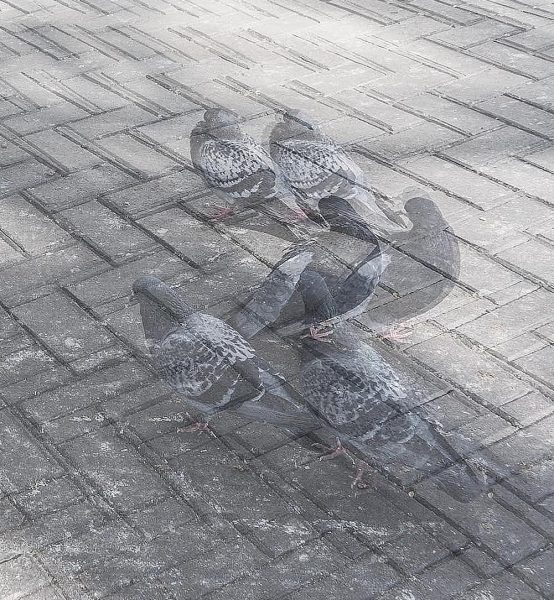
Janet Nabey has over many years explored the use of multiple images to explore movement. Using the burst function on her camera to take six images Jan later select three of them and layers them in Photoshop. She captures the busy flurry of pigeons, people on pedestrian crossings and the
general public at the British Museum.
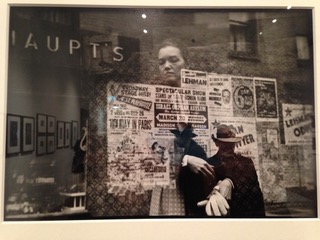
Lauris Morgan-Griffiths, who has recently joined the group, presented a series of images under the title ‘Here not There’. A distracted woman, in a café, looks out to the street through the glass advertising ‘Soup’ and ‘Pies’. Reflections and intriguing combinations of images occur in several of Lauris’ images. Torn black-and-white posters with flashes of coloured stickers; a man in Arles smokes a cigarette alongside a screen with coloured seaside posters; a young woman’s sad and serene face sits alongside shady looking men in Trilby hats. The meeting felt that a selection of these images would work coherently together, and could successfully be part of an exhibition. We were grateful to Lauris for sharing her work.
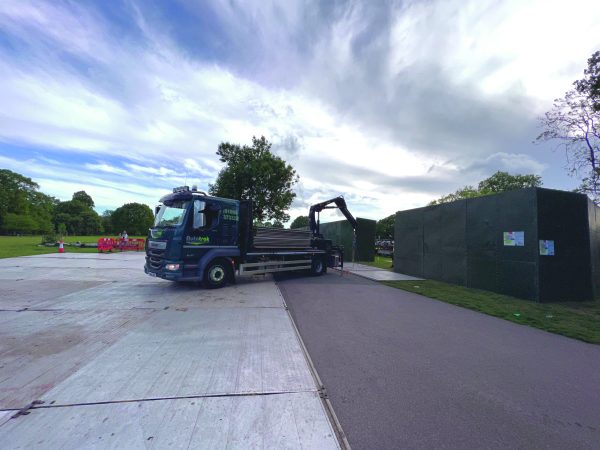
Astrid has been documenting the issue of public spaces being used for private events such as festivals. At Brockwell Park, two weeks are taken every year in May to construct the venue enclosed behind three-metre high green smooth metal walls, occupying roughly half of the park. Heavy machinery is used, crossing public paths; steel and heavy plastic plates cover the grass and the public’s use of the park is disrupted. After three weekend’s of festivals’, the venue is disassembled taking a further week – but the scars on the grass remain visible a year later. Buoyed by the intervention of the actor Mark Rylance, a local resident, who describes the fenced off area of the park as being “like a prison camp”, local residents have won a judicial review, but the festivals went ahead nonetheless. Astrid wants to develop her images into a coherent set. The meeting’s views varied on how to to this: some suggesting that she photographs inside the festival, while others felt they should only show the impact on the outside for those not attending.