©Soraya Cerio
The power and beauty of water featured prominently in the Central Group’s June meeting. Images ranged from abstracts to landscape and brand photography, and also included a look at water pollution.
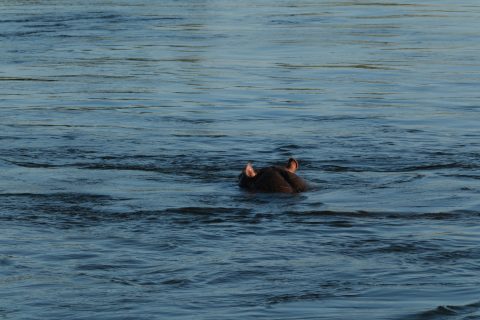
Steve Jones amused us by showing how water can conceal, reveal and then conceal again. The surface of the water ripples, before the top of an animal’s head, with its characteristic ears, first emerges, then the full head of a hippopotamus with its powerful jaws open appears, before the creature disappears again, leaving no clue about what danger lies beneath. But perhaps this “fair hippopotamus” was simply enjoying “mud, mud, glorious mud” (Flanders and Swann)?
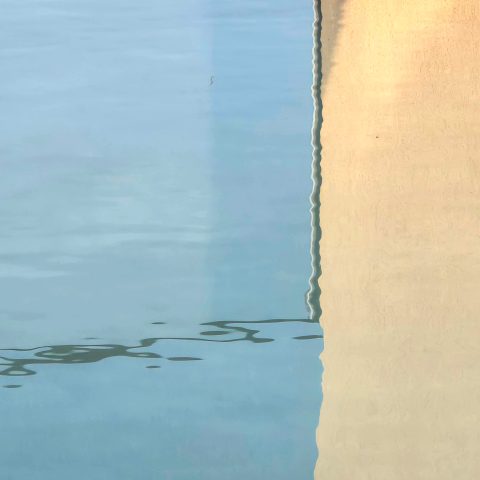
Jim Paterson explored water in its many forms: moving and dynamic, or flat and reflective. The photographer can use a long exposure to create a smooth glassy finish against the rugged rocks, or a high shutter speed to freeze the droplets of water. He finished with an abstracted image reminiscent of “A Bigger Splash” by David Hockney (RIP).
Pauline Moon combined text, with quotes from newspaper reports of water pollution incidents, alongside idyllic photos of rivers & canals, and the glorious beaches of Harris and Lewis. She was asked if this was an attempt to create a campaign website (would the text be better incorporated into the images?). Pauline replied “it’s just what is inside my head”. The images prompted debate about the “dirty business” of the water companies, their overriding profit motive and the failure of “self-policing”.
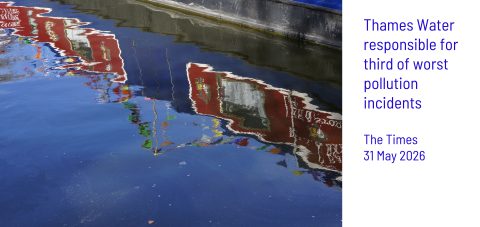
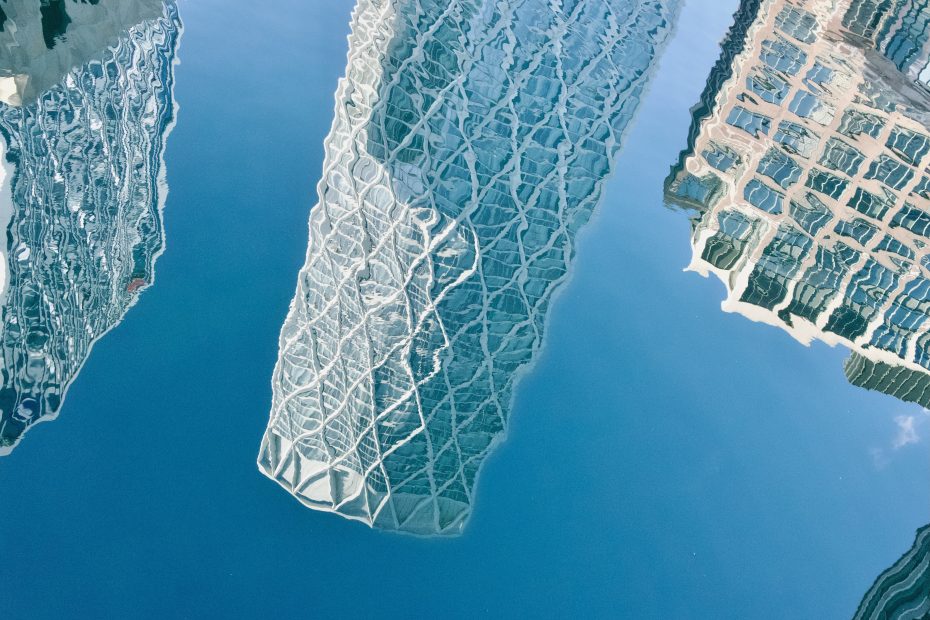
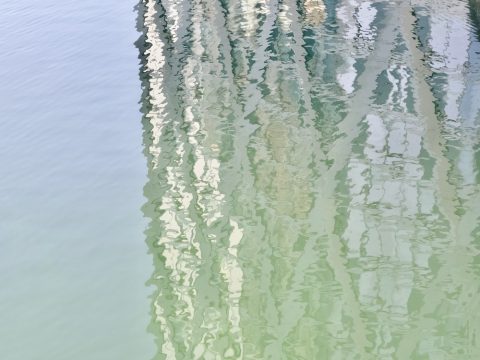
Soraya Cerio’s photographs are of the “Diamond Tower”, an up-market, high-rise residential building, reflected in the waters at Canary Wharf. The sequence of photographs, taken within a few minutes of each other and without moving far, showed the tower gradually transformed into an abstract ripple. Soraya reflected on the fact that she had seen two men: one well dressed (a resident of the tower?) and the other less advantaged. Was she happy that her images showed the advantage and wealth associated with this prestigious tower block dissolve away?
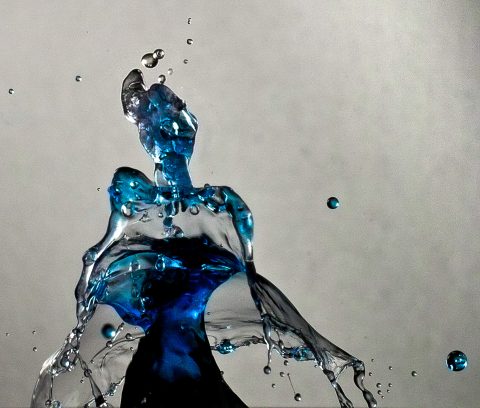
Simon Zebu also reflected on the different forms that water can take, from ice in a glass and pearl-like hailstones, to dynamic shapes, frozen in time. Simon created the latter by photographing, at very high speed, one bouncing droplet of water colliding with a second, falling droplet – resulting in a three-dimensional shape reminiscent of a Jean-Paul Gautier eau de parfum bottle. He also showed an image from his best fee-paying job, promoting Bonaqua for a Russian market. He remarked that the more the art Director pushed him, the more stressed he became, but how much more pleased he was with the final image.
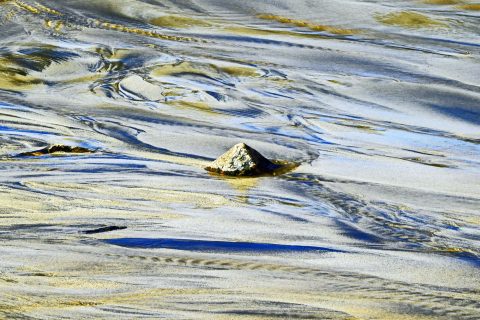
Austin Guest went to the Hebridean islands of Harris and Lewis, and was fascinated by the constantly changing patterns of the rivulets of water and the way they carved into the white sands as the tide receded. The scale was sometimes ambiguous, but the miniature worlds created were complex and strange. As with Soraya’s photographs of the Diamond tower, Austin’s images were taken in a relatively short time in the same place and, as with Simon’s drop image, the results have a human, even visceral, quality.
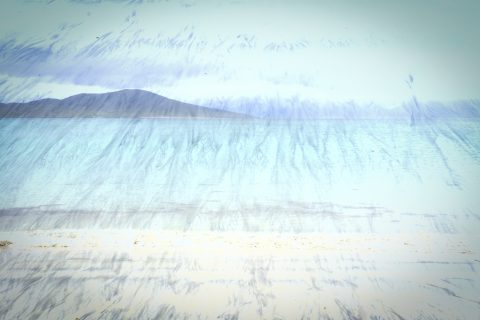
Astrid Zweynert was also in the Outer Hebrides but she explored the use of in-camera double exposures to superimpose the water or the sandy beach onto the distant, rugged landscape. One image felt as though it had been printed on Japanese textured paper. Astrid wanted to juxtapose the power and strength of the darker rock (Lewisian gneiss, the same ancient bedrock that extends to Canada and Greenland) against the crystal-clear water and white sandy beaches.
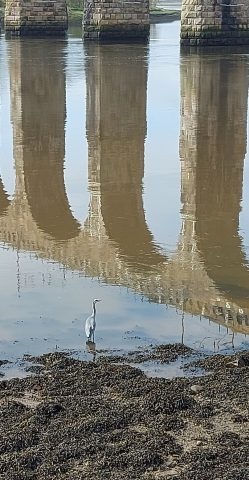
David Helms’ photographs were not particularly of water, but had water in them. The inverted arches of the railway viaduct at Berwick are reflected in the River Tweed, matching the tall, slender shape of a waiting heron. In another image, spiky grasses are reflected in still water creating abstract forms. David likes revisiting Greenland Docks, where elegant swans and a retinue of cygnets glide gracefully, contrasting with a discarded bike at Foxton Park canal.
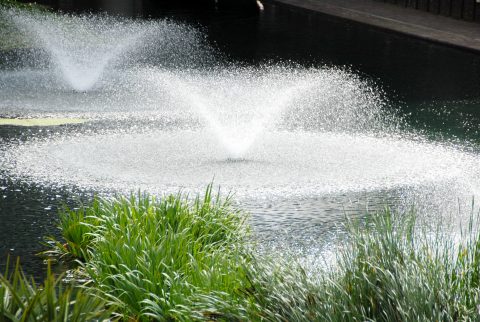
Similarly, Dorota Boisot’s aim was not to photograph the water itself but to look beyond. A set of three water sprays at Barbican echo the shapes of the adjacent bedding plants, while in Vienna the elegant buildings emerge from behind a huge fountain. The fountains at Coal Drop Yard offer an opportunity for children to play and an opportunity to photograph, but could get a negative response from security staff?
Two people showed their own projects.
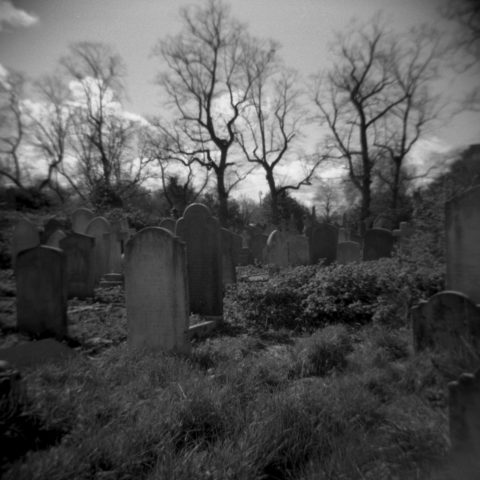
Heather Martin has been using her Holga – an analogue, Chinese-made low-cost camera whose fixed 60mm focal length plastic lens creates vignette and blur with surrealist and impressionistic overtone. She described it as being “point, shoot and hope!”. In Brompton cemetery, she loves the nature reserves, combined with the architecture of the mausoleums and gravestones. The audience admired the strong shadows together with the layering of shrubs, gravestones and trees.
Mark Friend also uses a fixed focal length camera – his unobtrusive, and not so low-cost, German classic Leica IIIf. He greatly admires the street photography Vivian Maier, Saul Leiter, and Ernst Haas. He is exploring different styles, sometimes combining shapes and angles, at other times using a shallow depth of field. Some of his images feel timeless, others have an impressionistic feel, while some are clearly of the here and now.