
Featured image © Chloë Sastry
Chiaroscuro was the theme of this month’s meeting, and some contributors admitted to having to research the meaning of the word. Literally “light-dark” in Italian, it refers to images with a single source of light and strong tonal contrasts, enhancing dramatic impact and giving the illusion of three dimensions. Churches and building architecture were reference points for many of the contributors.
© Soraya Cerio
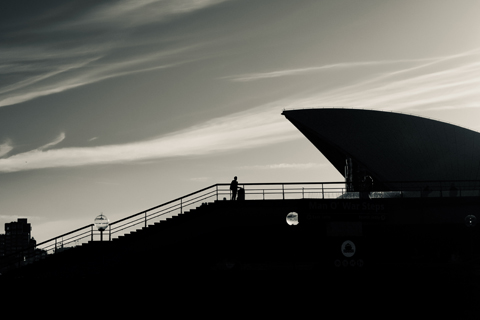
Soraya seized the moment while in Sydney to capture light flares behind the instantly recognisable curved shell roof of the Opera House. In one image the sharp outline of the roof is offset and softened by an ethereal cloud formation.
© Fred Kavalier
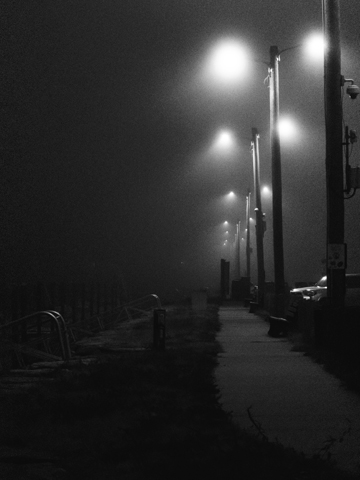
Many of Fred’s images were devoid of people, concentrating on the narrow streets of traditional European towns, while one captured a bleak foggy night harbour-side in America.
© Simon Zebu
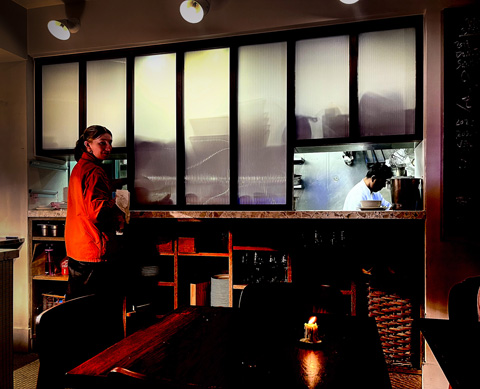
Simon presented two well-lit images of his head: one in the form of a sculpture, made by his mother, of him as a boy; the other a photographic portrait of him as he is today. The saturated colours and the strong tonal contrast in his photograph of a restaurant waitress was more reflective of Caravaggio’s work.
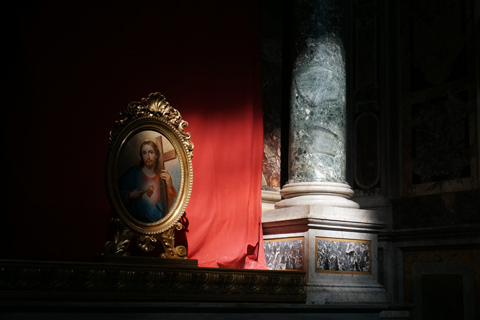
© James Cashmore
James was struck by the visual impact of a shaft of sunlight illuminating a religious painting and the adjacent wall in a church in Verona. His photograph captured the texture and feel of the painting as well as the subtle shades of the marble surround.
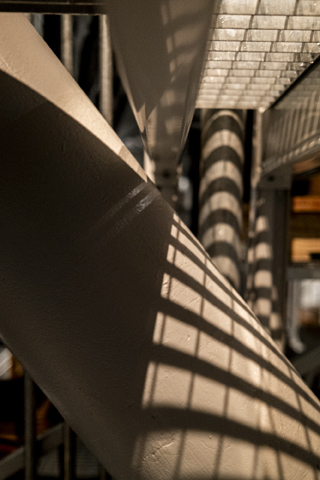
© Chloë Sastry
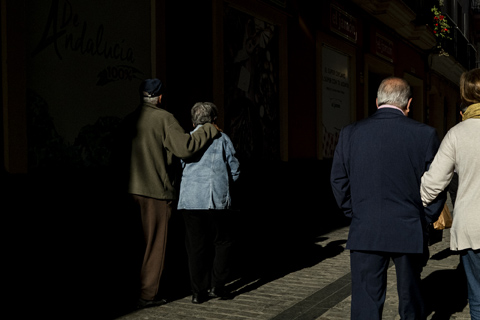
Chloë was fascinated by patterns of light and the structural geometry of the V&A East Storehouse building. By contrast, in Florence, two elderly couples mirrored each other’s movement while partly illuminated by afternoon October sunlight.
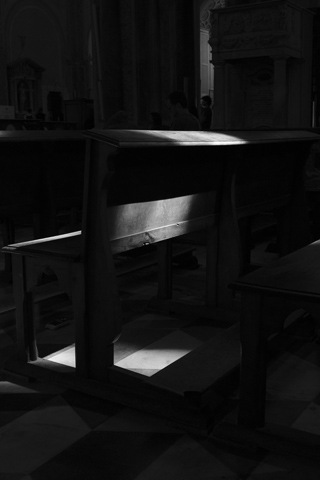
© Astrid Zweynert
Astrid noted that, in Naples, there is a “church on every corner”, offering photographic opportunities and challenges. In one image she skilfully captured the beautiful texture of the ancient wooden pews, illuminated by sunlight.
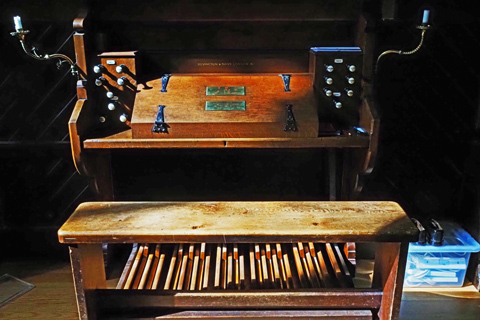
© Austin Guest
Austin offered a selection of images, including homes highlighted by a beautiful sunrise on the Isle of Lewis and the church organ in Geddington, Northamptonshire. As with Astrid’s image, Austin had captured the warm tones of the organ’s wooden case bathed in natural light. Alongside, an incongruous pair of shoes could be seen (ready to be worn by the organist?).
Personal projects:
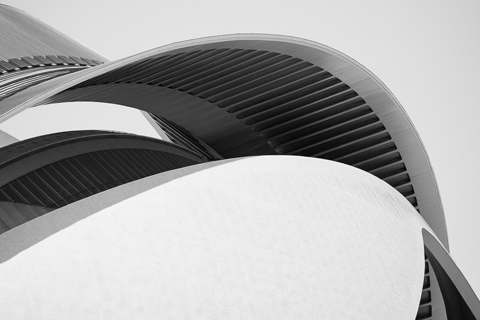
© Richard Pearce
Richard showed his interest in architecture and an eye for geometry with images from the museum complex at Valencia. Rather than showing the overall building form, he cropped his images to show curved forms in an abstract way. He mostly excluded people to leave the viewer guessing the scale involved.
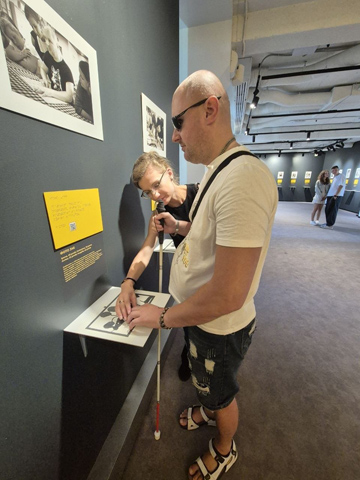
© John Tolliday
John provided a fascinating account of his work in Ukraine where he photographed soldiers who had lost their eyesight in battle. His images were shown at ZAG (Zenyk Art Gallery) in Lviv, and presented in different ways: a conventional photograph, some text and a QR code, a braille description and also as a solid 3D printed version of the image to allow unsighted people to “feel” the image. The work therefore worked on several levels for both the sighted and the unsighted, He plans to take the exhibition to Philadelphia next.
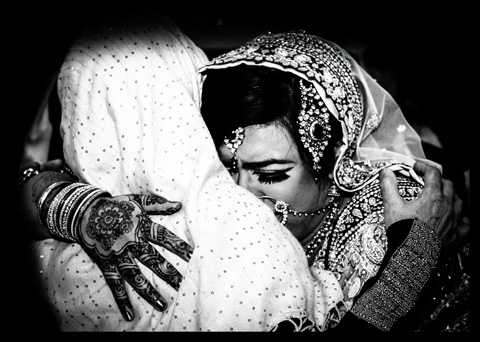
© Raj Munisami
Raj presented images originally intended for the Connected:Disconnected exhibition. Some also had a sense of Chiaroscuro about them, particularly the emotional farewell between a bride and her mother. Raj also included a bleached-out images of his two sons, one looking directly at the camera and connecting with the viewer, and the other, in the distance, disconnected.
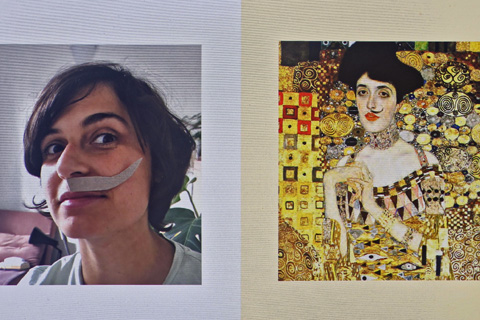
© David Bennett
David’s longtime project riffed on his partner’s surname which, in Polish, means “half moustache”. 36 people sent photographs of themselves posing with a fake half moustache. He then took each of these self-portraits and paired them with a photograph of a famous artist / work of art, editing the images as necessary to remove or add facial hair, showing the finished images side by side.
The group’s next meeting will take place on Wednesday, 11th November; rather than having a theme, this will provide an opportunity for participants to show images from their personal projects.