
Featured image © Steve Jones
At the November meeting we reviewed 12 personal projects from a broad range of practices, some of which generated considerable discussion.
© Janet Nabney
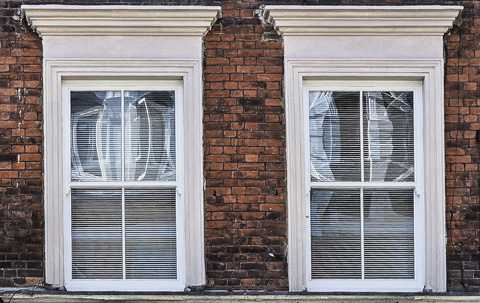
Janet had long resisted, but finally took the plunge into smartphone photography with a Samsung S25. She found it very convenient to carry which enabled to walk around the city capturing images of scenes that struck her creative mind. These ranged from reflections in windows which caused layering like double exposures, unexpected patterns in shadows, and juxtapositions.
© Steve Jones
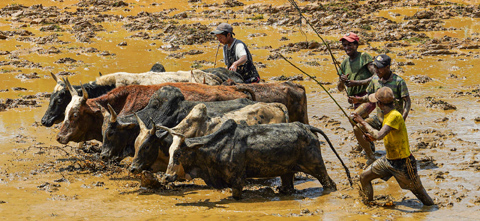
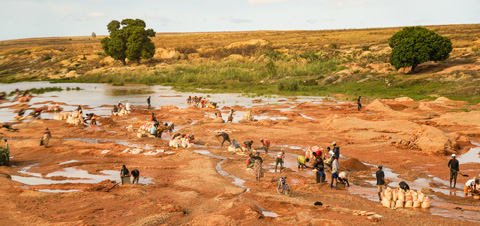
Steve showed a remarkable travel project mostly taken from a bus window in Madagascar which captured the ochre/orange colours of the land. He came across scenes of pre-industrial physical labour such as ploughing with zebu oxen, women carrying heavy loads on their heads and rickshaws used for furniture removal. His shot, from an elevated position, of a crowd panning for gold and sapphires in a wide riverbed had the composition and colours of an old master painting.
© David Helms
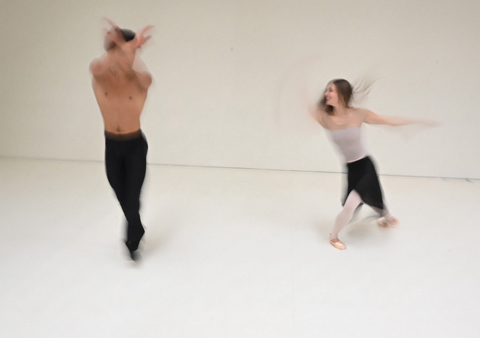
David had been on a dance photography workshop which utilised contemporary and ballet dancer couples as subjects. He showed the results of his experimentation with different crops, motion blur, use of high key lighting to capture their almost ethereal presence and interactions.
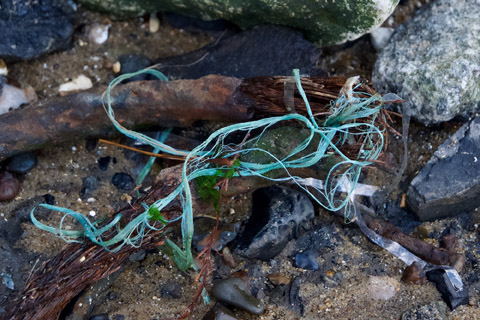
© Soraya Cerio
Soraya showed her documentary project Flotsam which highlights how discarded objects end up in the environment, with the plastics often taking 1000 years to disappear. She photographed undisturbed litter on the banks of the Thames near the OXO tower using a visual aesthetic to attract viewers to consider the subject. The images were tightly cropped and featured juxtaposed bright colours, rich textures and patterns.
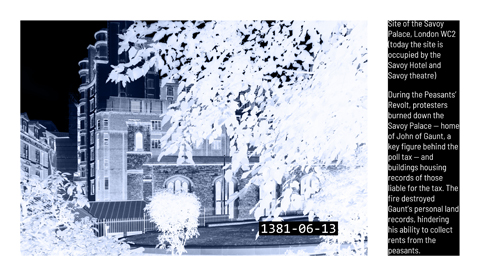
© Pauline Moon
Pauline’s Sites of Resistance project showed historic locations at which social protest had taken place. She converted the images to monochrome negatives, thus providing a form of resistance to the viewer, and contextualised them as anti-establishment by adding timestamps as if they were surveillance images. She had experimented with how to associate textual information with each image. The effectiveness of using wall text, or text within the image in a box, or text distributed as snippets across the image was debated at length.
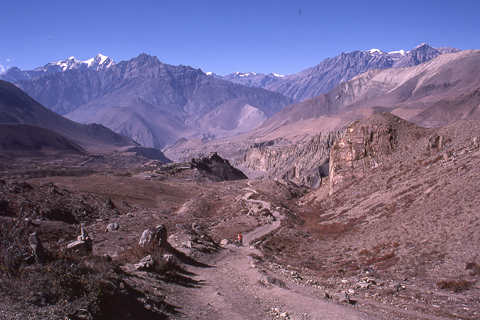
© Jim Paterson
Jim showed a sentimental project from 1978 shot on Kodachrome of the 17 day, self-guided, Annapurna trek he undertook with his wife. It shows their slow ascent through the changing landscape to the Johnson Pass at 17,000 feet above sea level. Along the way Jim captured portraits of villagers, porters, sherpas, and the change from fertile terrain to desert. The sweeping landscape panoramas were both magnificent and timeless, yet the portraits authentically captured the time before mass tourism.
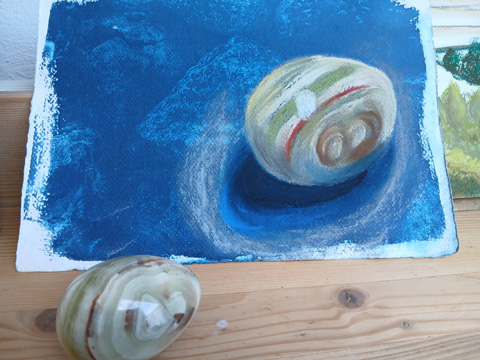
© Eve Milner
Eve experimented with creating mixed media images using her photographs. She attended an art course in Somerset, which introduced her to chalk/charcoal drawing and sketching using watercolour and pastel crayons. This led her to colour a cyanotype of a marbled egg using pastels. She then used pastels to add colour hues to the Thames water behind an image of a refugee and added a handwritten TS Eliot verse. The result was even more satisfying and engaging than the original photo.
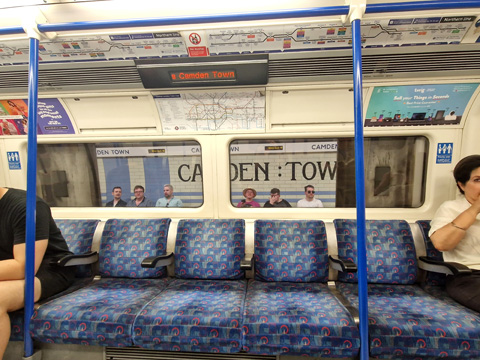
© Natasa Jandric
Natasa’s practice is candid urban street photography using a smartphone. She described the London Underground as her theatre of people, allowing her to capture images of unusual people and situations. Her standout shot was from inside a tube of a row of empty seats opposite and passengers seated on benches on the platform at Camden Town.
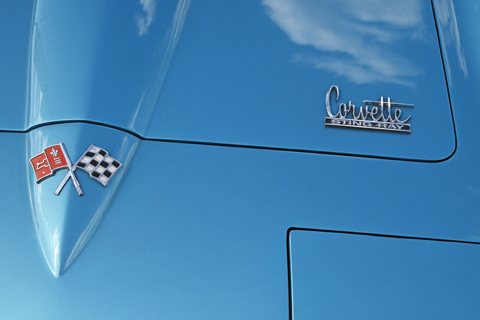
© Austin Guest
Austin’s project was inspired by a car image from the William Eggleston exhibition at the Photographers’ Gallery. He showed similar tightly cropped and vibrantly coloured images of car grilles, bonnets and paintwork, mostly from American cars but also including a TVR and, of course, an Austin. All very nostalgic and visually satisfying.
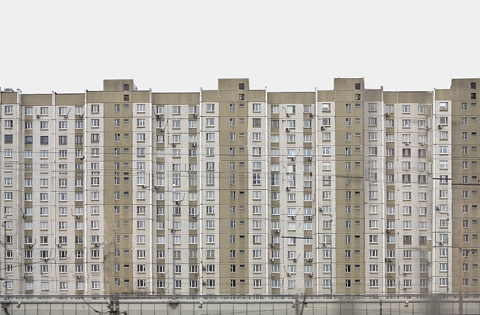
© Julian Sainsbury
Julian’s project was about Soviet-era buildings whose grand architectural exteriors (Bauhaus, Brutalist, Ocean Liner) disguised the cramped interiors endured by the residents. The images were taken in East Germany, Uzbekistan and Russia. They share a consistent frontal viewpoint and squared up perspective and could be easily exhibited together as a typology.
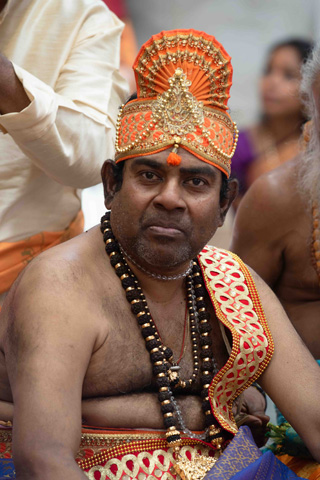
© Raj Munisami
Raj’s project told the elaborate story of this year’s Diwali celebrations at home and the temple, showing deities, offerings, priests and costumed dancers. He explained their significance and how it marks a celebration of victory of light over darkness.
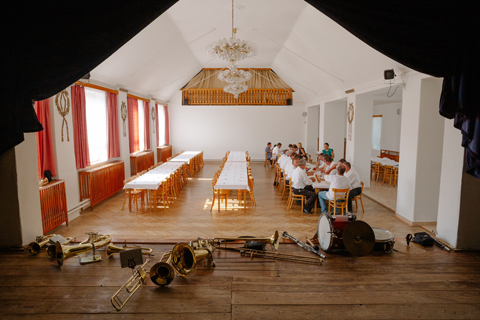
© Ben Meyer
Ben’s documentary project went behind the scenes of the Ride of the Kings Festival in South Moravia, Czechia at Pentecost time. The king was played by a young boy dressed in ceremonial clothes with a rose held in his mouth. He rode a horse colourfully decorated with paper flowers, followed by a retinue of young people and a Polka brass band. Ben, with his local connections, managed to get really close the action and even took a shot after the event of the band sharing dinner having laid out their instruments on the stage.
There will be no formal meeting in December; instead, members will have the opportunity to join a photo walk in Soho, followed by an optional Chinese meal. The next meeting at Lumen will be on Wednesday, 13th January; theme TBC.